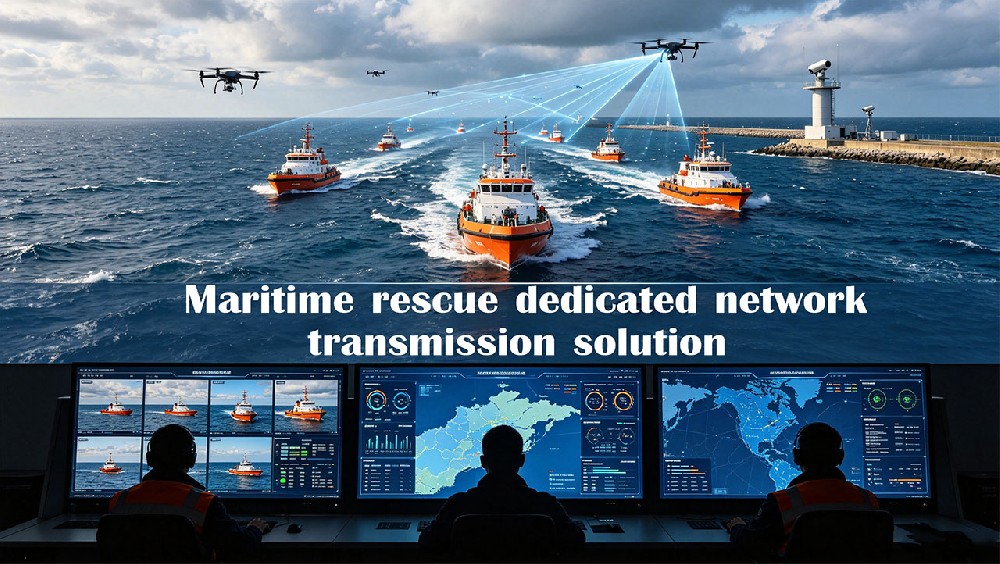
Vast sea areas are generally blind to 4G and 5G public network coverage. Large-scale offshore rescue drills have long faced typical industry challenges: scattered camera positions on multiple vessels, dynamic signal shielding caused by sea wind and waves, and difficulties in synchronous transmission over tens of kilometers between sea and land. These issues make real-time full-scene video feedback almost impossible, and conventional public network live streaming and wireless transmission devices cannot adapt to extreme offshore operation scenarios. Recently, a large-scale international shipping maritime comprehensive rescue drill with 800 participants was successfully held. Relying on MINEMedia LAN transmission devices and long-distance ad-hoc network matrix, an exclusive independent offshore private network was built to achieve stable full-domain HD video transmission over 100 kilometers between sea and land, forming a mature and replicable visual command and emergency live broadcast solution for maritime scenarios.
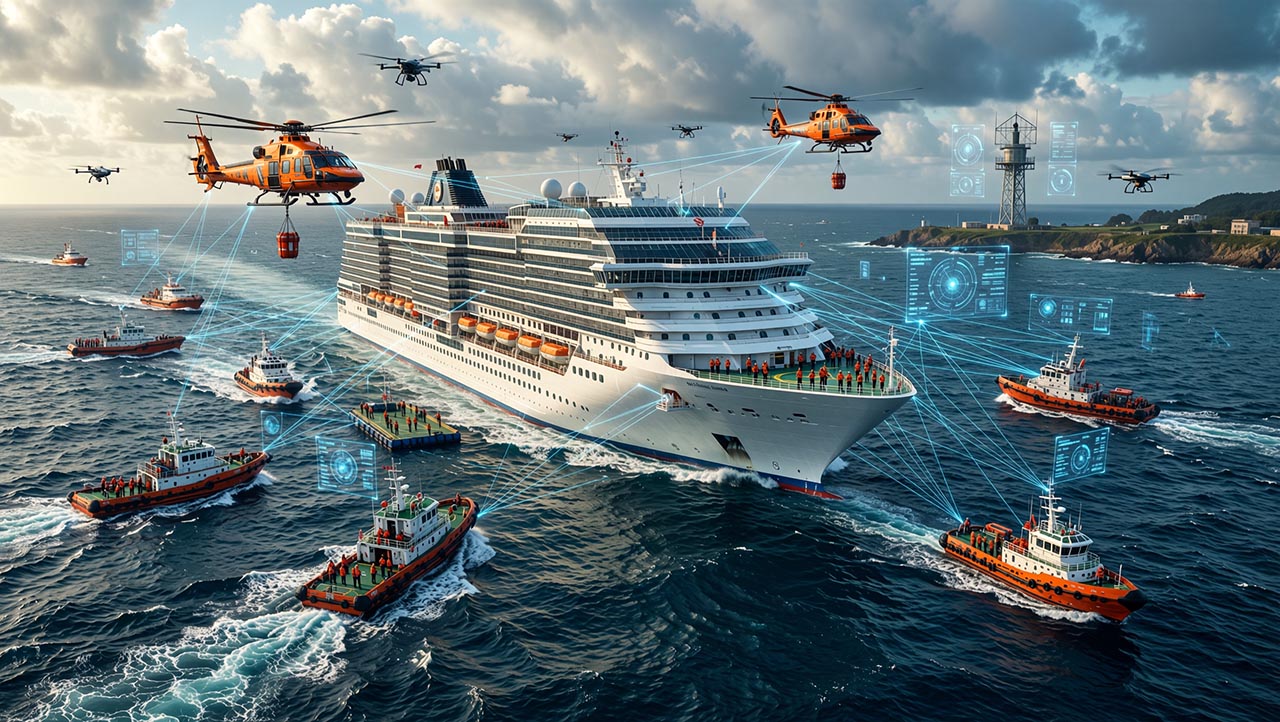
Centered on a large cruise ship, the drill carried out collaborative operations including search and rescue, medical evacuation, and emergency disposal with multiple rescue vessels. The shore-based medical shelter and rear command center required real-time access to all offshore camera footage, posing extremely high standards for transmission stability, real-time performance and full coverage. The drill involved multiple technical difficulties: the operation sea area was completely free of operator base stations and public network coverage, rendering traditional live equipment ineffective; six HD cameras were deployed dispersedly on different vessels, with vessel movement and sea wave interference easily causing signal fluctuation and transmission interruption; the tens-of-kilometers distance between offshore operation areas and shore-based facilities frequently led to video stuttering, frame loss and latency, which would directly hinder rear command decision-making and on-site real-time judgment.
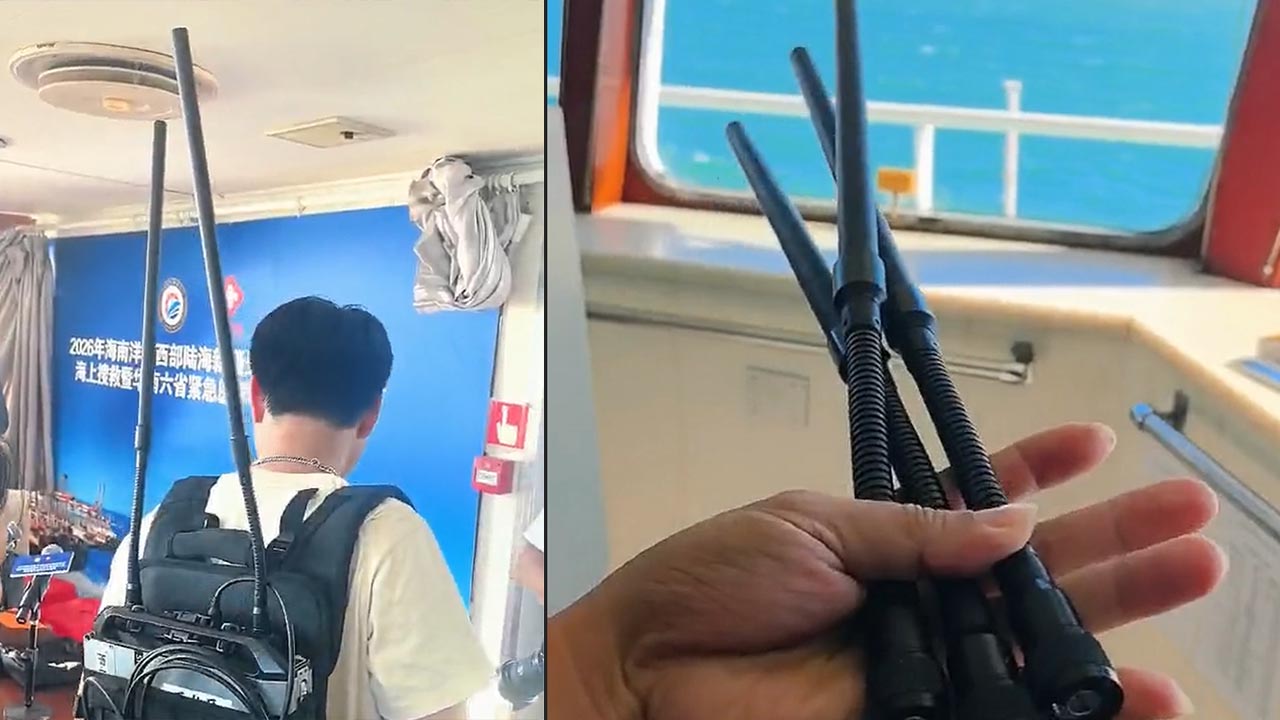
To balance transmission stability and on-site mobility in complex offshore environments, the project team optimized the equipment deployment solution in a targeted manner. In the pre-drill test organized by the maritime bureau, the 2-meter fixed fiberglass antenna ensured stable long-distance transmission but featured large size and heavy weight, severely limiting the flexibility of mobile shooting for cameramen. In the official drill, the team fully upgraded to lightweight fiberglass antenna with flexible base. While maintaining high-gain and long-distance stable transmission performance, the antenna weight and volume were greatly reduced, perfectly adapting to individual mobile shooting and dynamic camera scheduling, and significantly improving on-site video collection efficiency and operational flexibility.
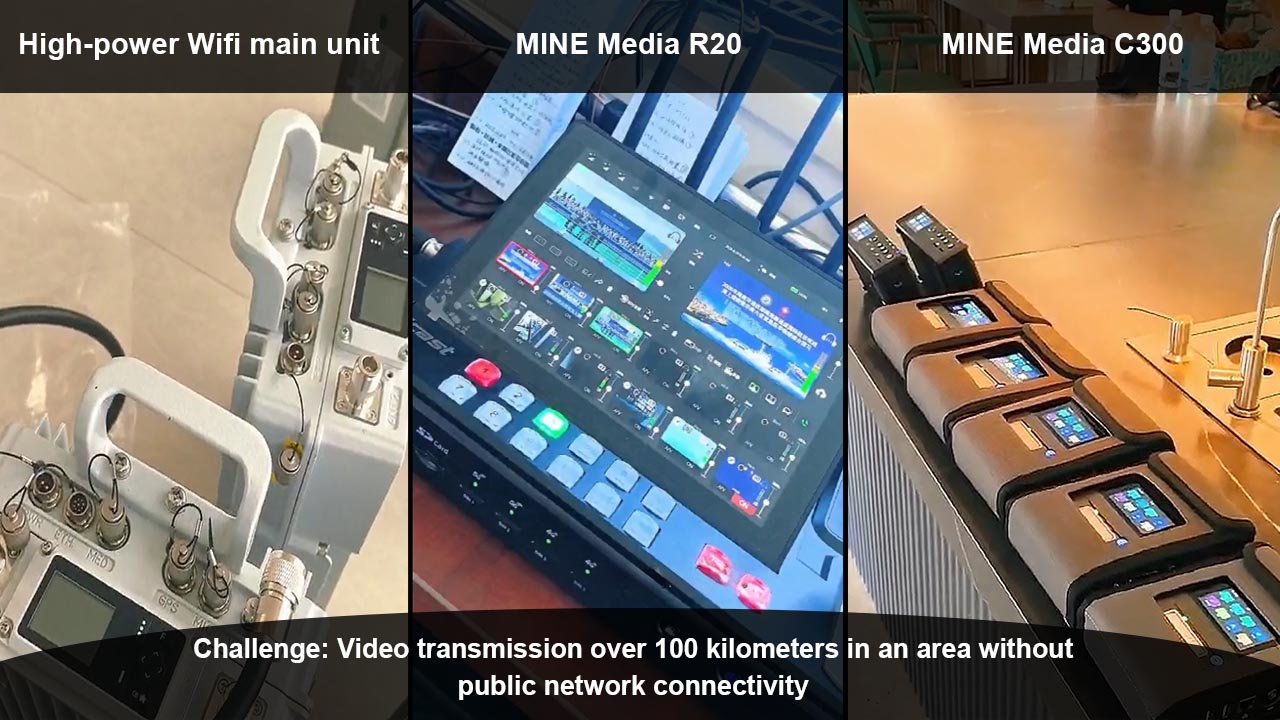
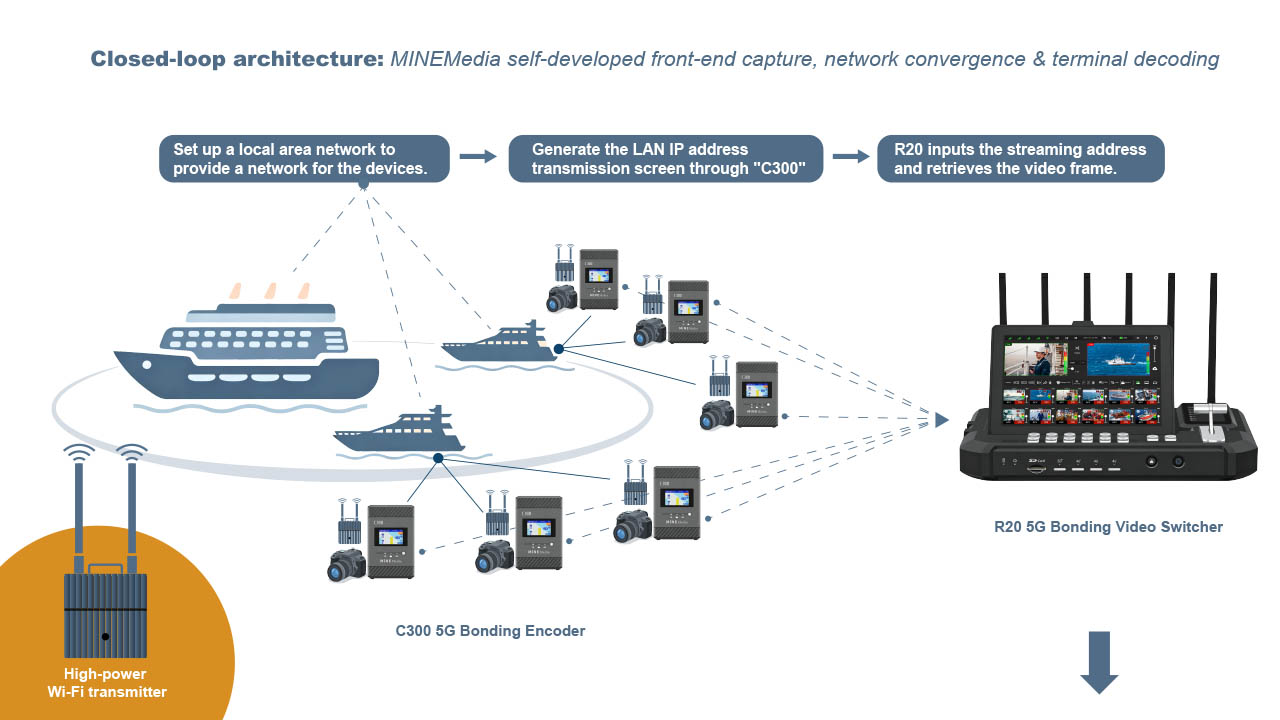
The entire offshore emergency visual transmission system adopts a closed-loop architecture of MINEMedia self-developed front-end collection, network convergence and terminal decoding. Operating on a pure offline private network without any public network reliance, it supports full-link HD video transmission and multi-screen synchronous scheduling through decentralized ad-hoc network technology. Centered on the MINEMedia R20 Intelligent Live Switcher, the system is equipped with 6 sets of MINEMedia C300 HD Live Backpacks and MINEMedia A318 Decoder Receiver to quickly build a temporary exclusive offshore LAN. Featuring flexible networking and strong self-healing capabilities, the system can well adapt to complex offshore scenarios with multiple dynamic nodes.
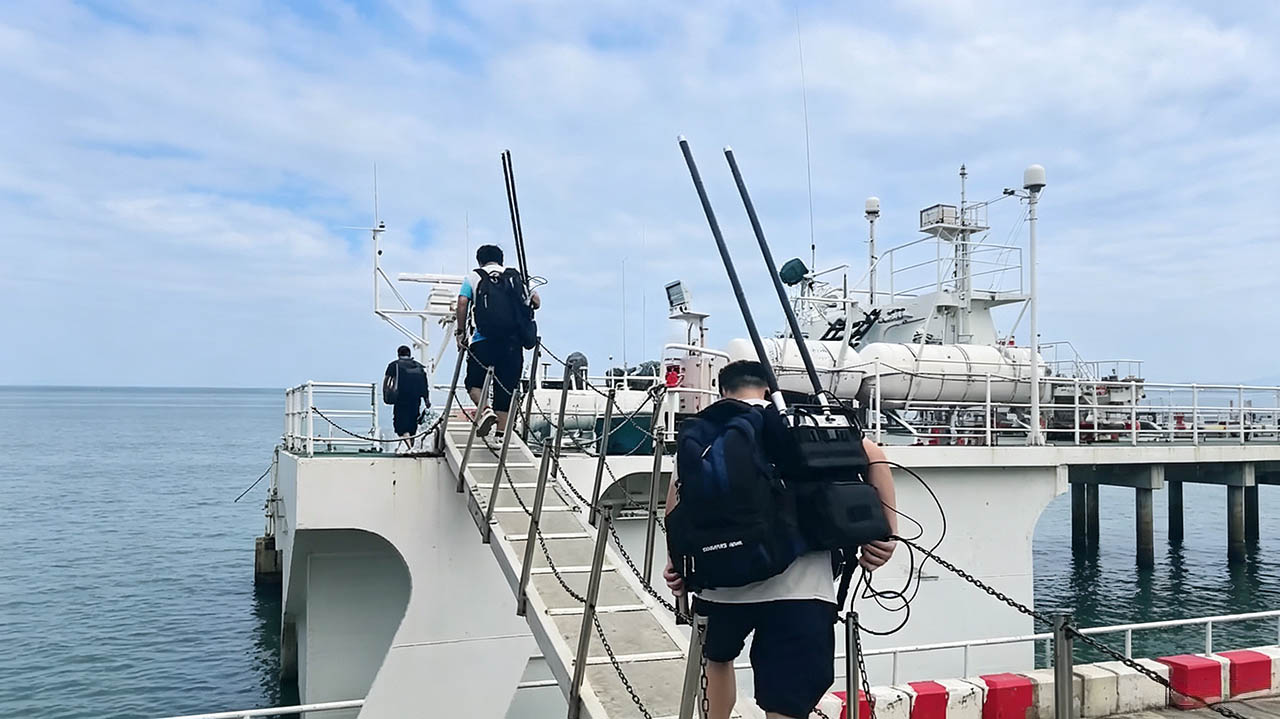
In the front-end collection stage, six MINEMedia C300 HD Live Backpacks were connected to on-site cameras to record full-process footage of offshore rescue operations. Supported by intelligent ad-hoc network and multi-hop relay technology, devices automatically networked and converged multi-channel video signals stably. A high-gain dual-antenna network device was installed at the commanding height of the cruise ship to avoid signal shielding caused by vessel structures and sea waves. It was wired to the core R20 intelligent live switcher in the cabin, with accurate configuration of LAN IP for each transmitter. Adopting low-latency RTMP LAN streaming protocol, the system realized synchronous convergence, seamless switching and real-time scheduling of multi-scene on-site footage.
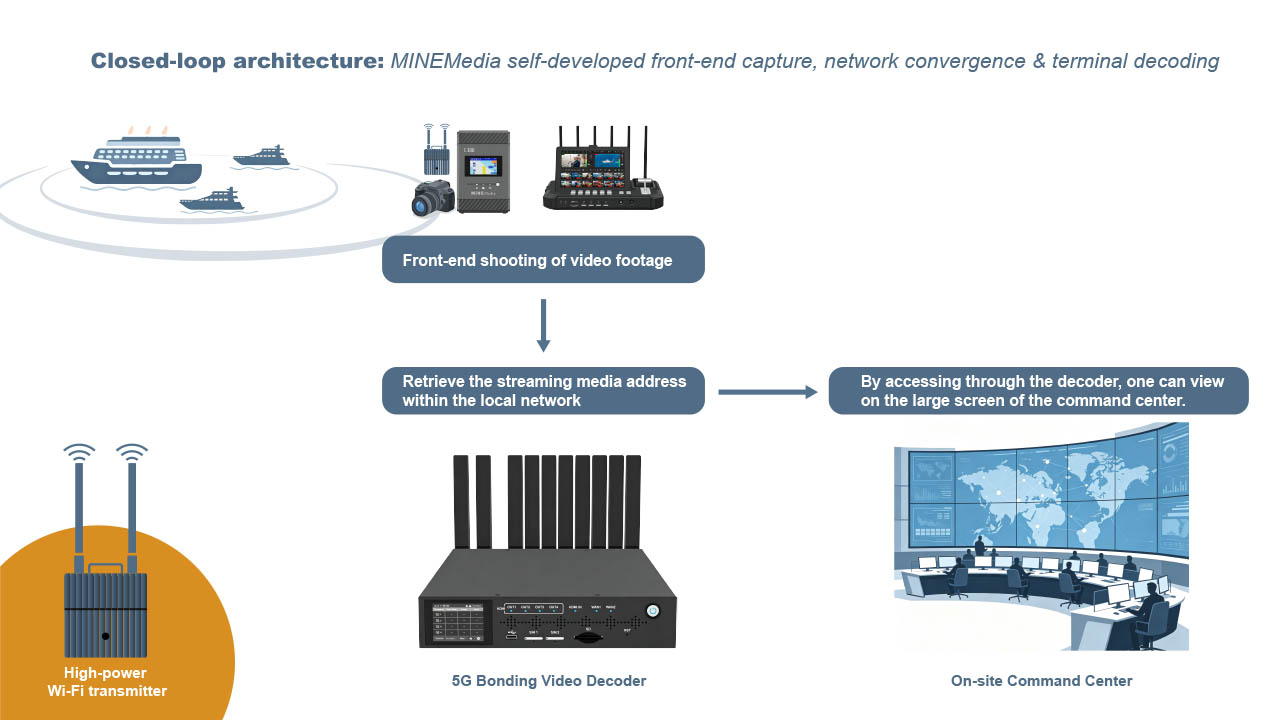
To solve the long-distance sea-land transmission challenge over tens of kilometers, MINEMedia A318 HD decoding and receiving devices were deployed on the shore to automatically pull video streams from the offshore live switcher. Connected directly to display devices in shore-based medical shelters and command centers via HDMI interface, it built a stable dedicated sea-land transmission link. The whole process realized real-time feedback and full-domain visual monitoring of offshore rescue scenarios, enabling rear commanders and medical teams to monitor frontline rescue dynamics in ultra-high definition with low latency, and providing reliable video data support for overall scheduling, emergency research and accurate disposal.
Verified by the large-scale maritime drill, MINEMedia’s no-public-network offshore long-distance transmission solution boasts outstanding core advantages that precisely solve key pain points of maritime emergency communication. First, pure offline private network with strong universal adaptability. Supported by ad-hoc network multi-hop relay technology, it achieves stable transmission up to 100 kilometers, completely independent of public networks, ideal for off-shore drills, open-sea search and rescue, ocean operations and other network-free or weak-signal scenarios. Second, flexible equipment matching balancing performance and portability. High-gain long antennas are available for fixed long-distance transmission, while lightweight flexible antennas suit mobile shooting scenarios, taking into account both transmission stability and on-site maneuverability. Third, full-link compatibility and efficient deployment. All MINEMedia devices feature unified protocols and strong compatibility, supporting one-click rapid networking and single-person lightweight deployment. Multi-channel HD videos are transmitted synchronously without stuttering or latency, meeting high-standard live broadcast and emergency command requirements for large-scale maritime activities.
The successful support of the 800-person large-scale maritime rescue drill fully demonstrates the excellent scenario adaptability, operational stability and professional reliability of MINEMedia’s offline long-distance transmission solutions. Beyond maritime emergency rescue and large-scale offshore drills, the equipment and solutions are widely applicable to forest fire emergency response, field event live broadcasting, island geological exploration, closed factory emergency drills, sudden field disaster disposal and other network-free and weak-signal scenarios, providing solid technical and equipment support for off-grid emergency visual command, full-domain situational awareness and real-time scheduling decision-making in multiple industries.